Hot Springs at Boun
Compare the waters of our two natural springs,
and take your time over six baths,
each with its own distinct character.
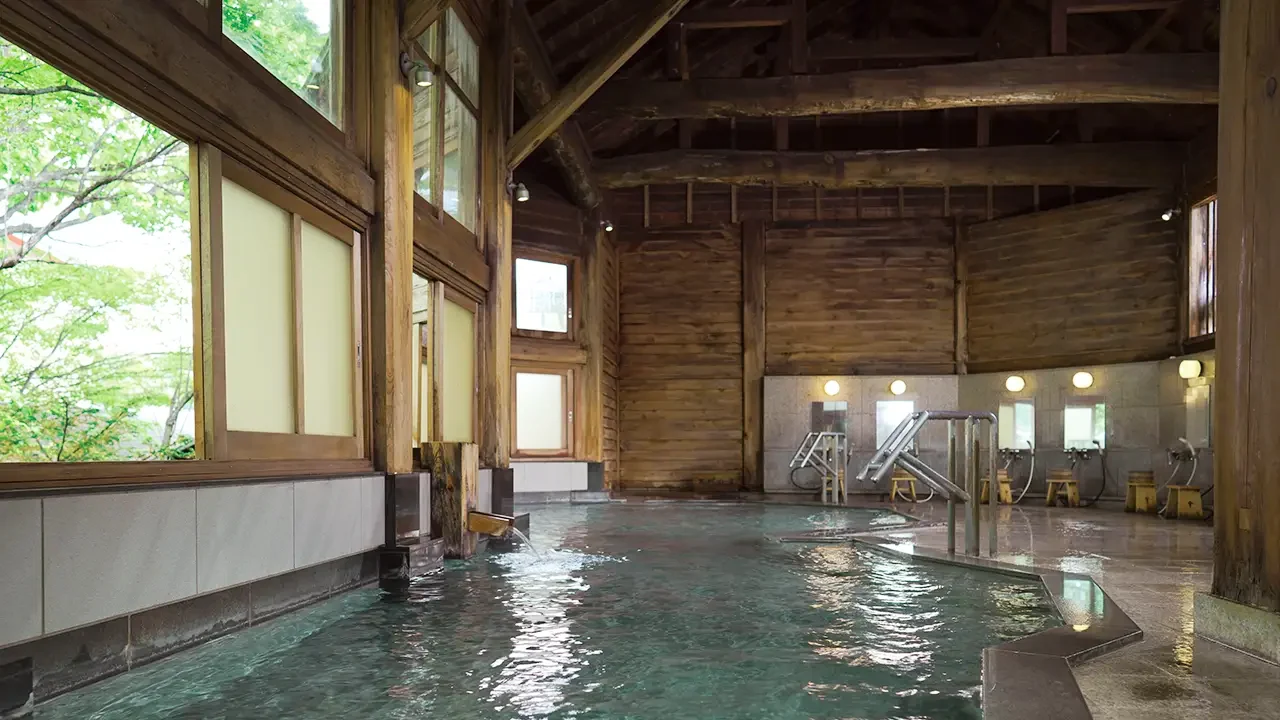
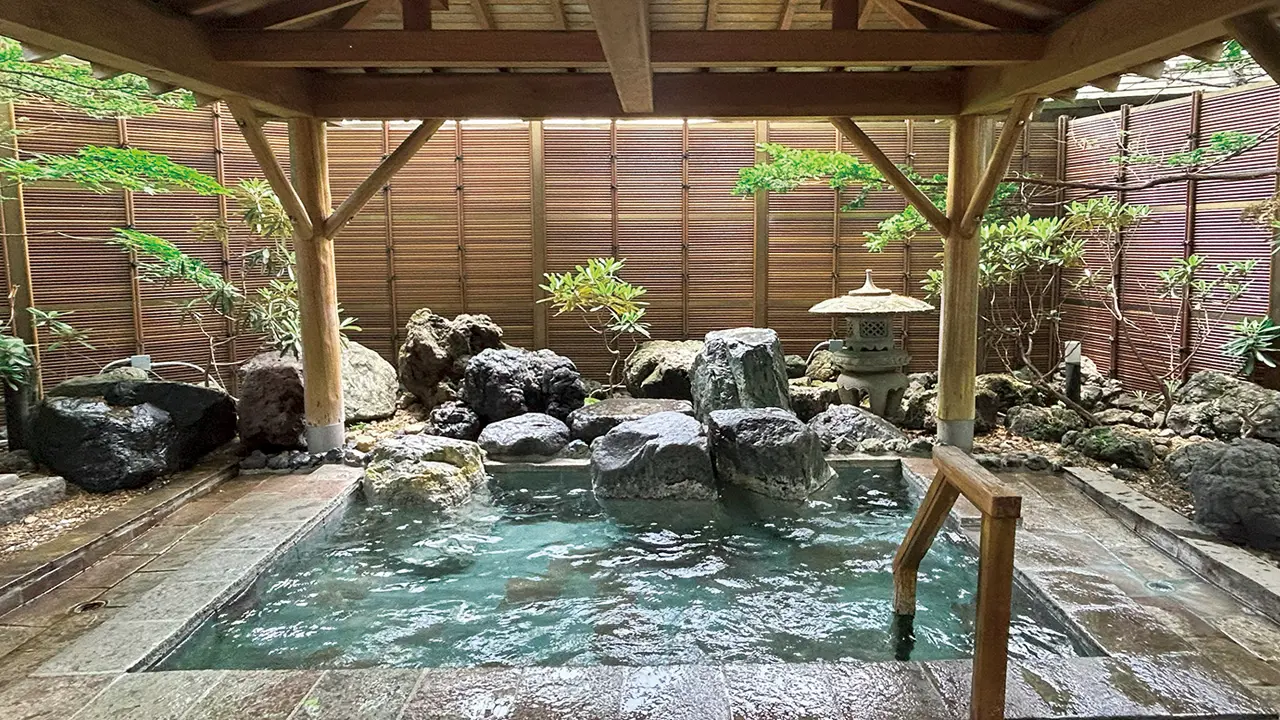
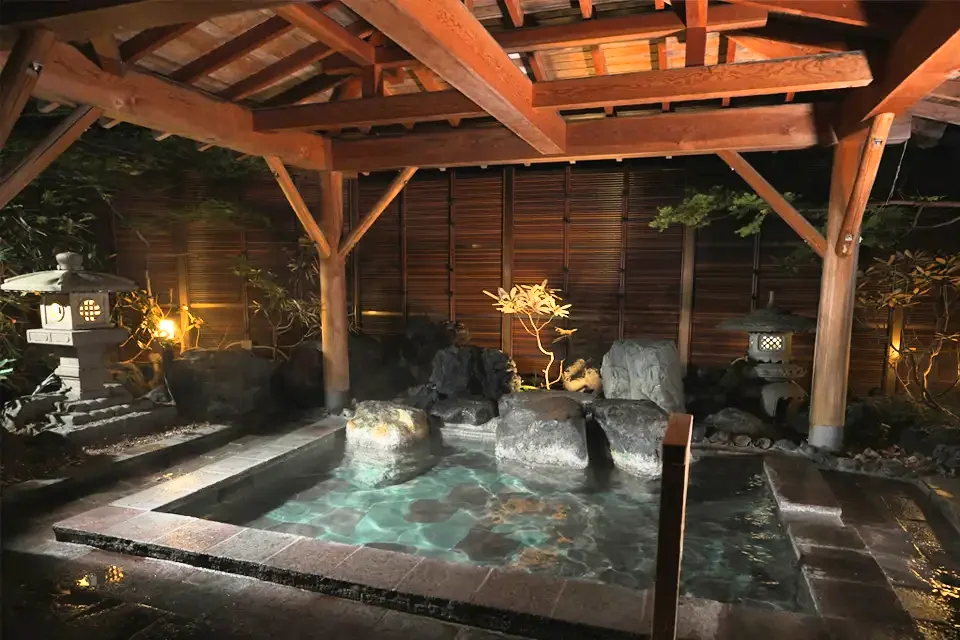
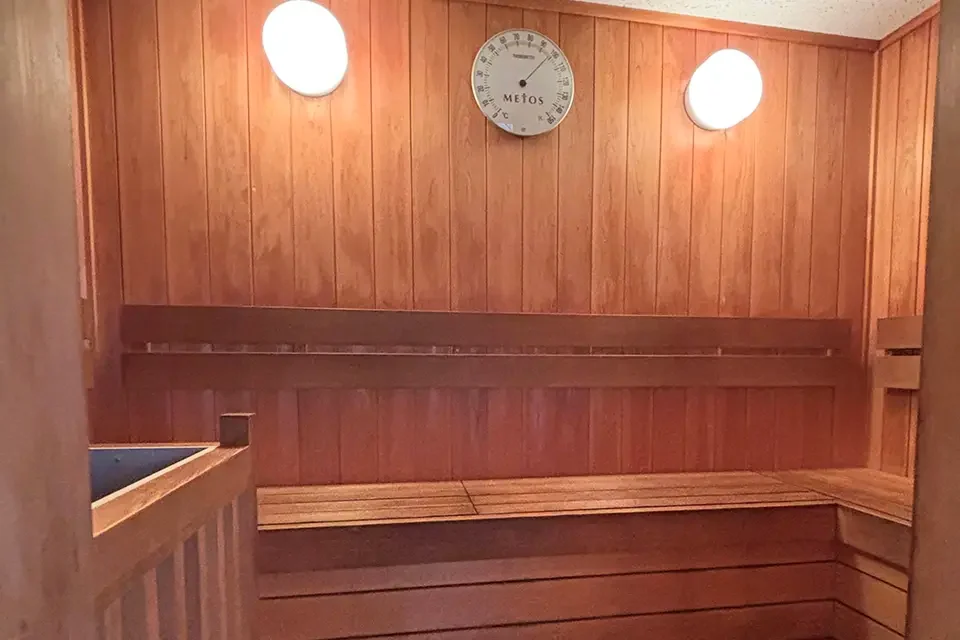
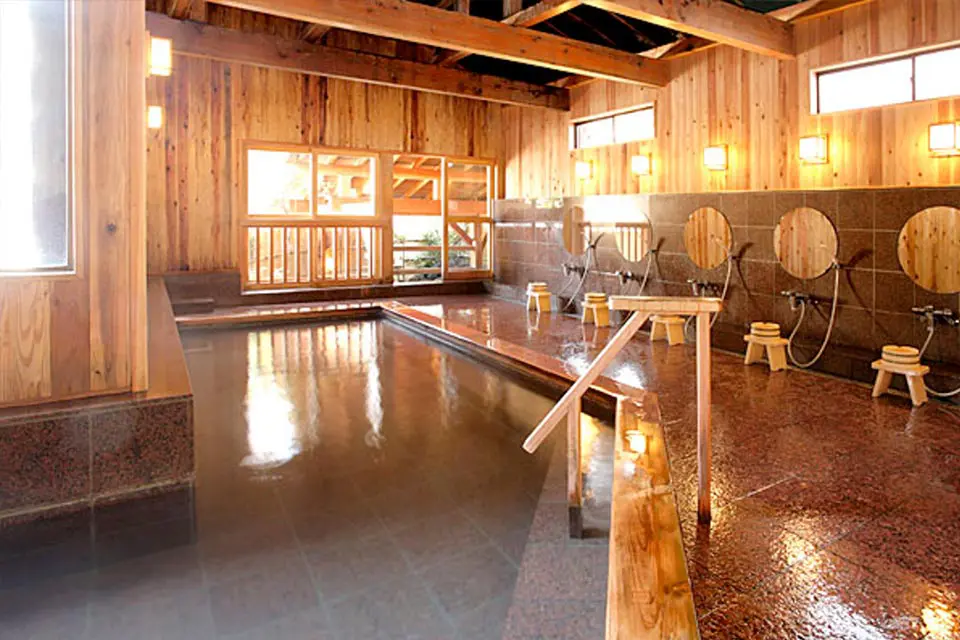
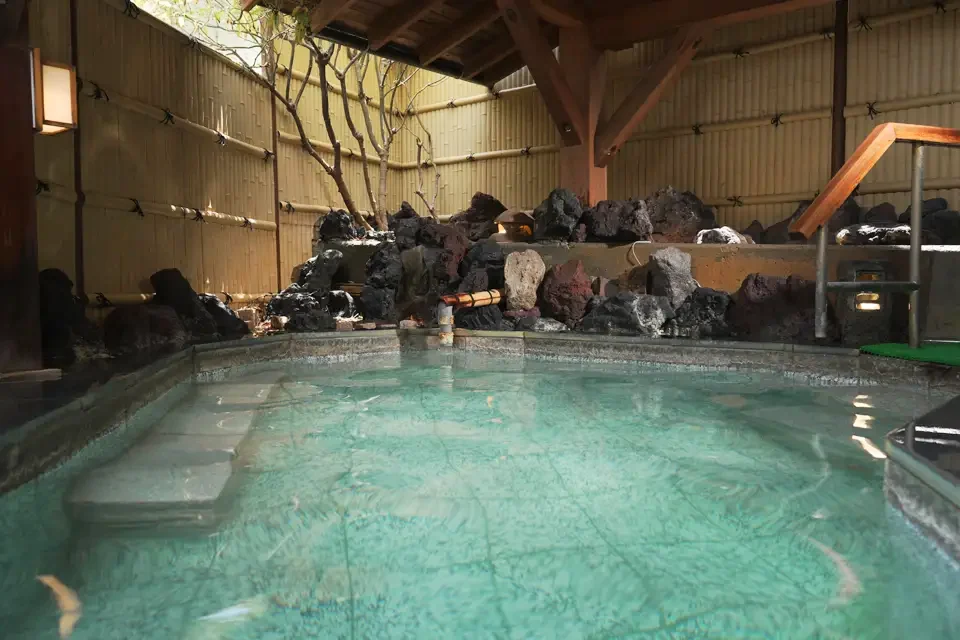
Bandainoyu
[Source: Bandaiko]
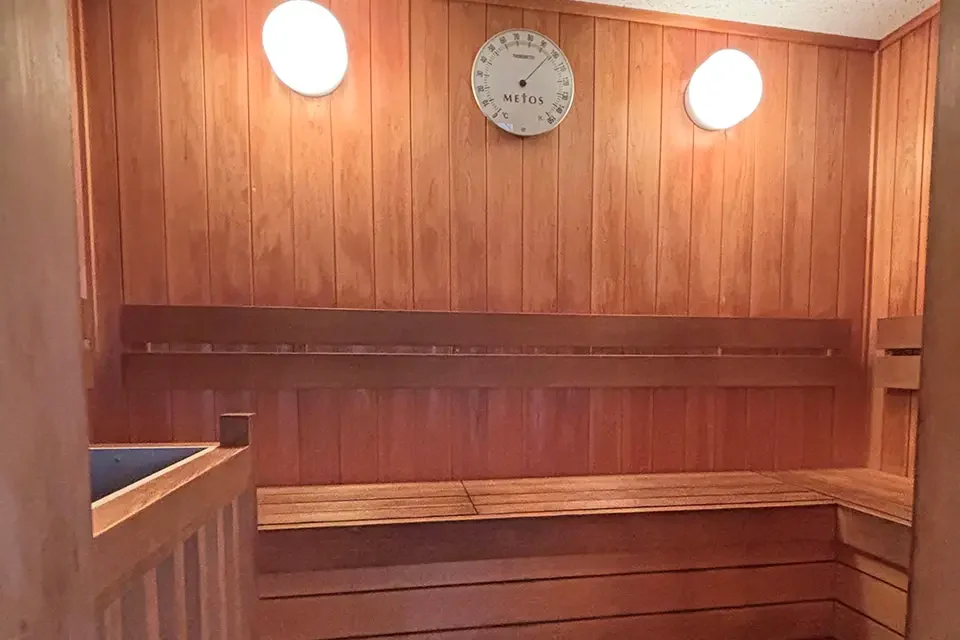
Indoor bath · Open-air bath · Sauna
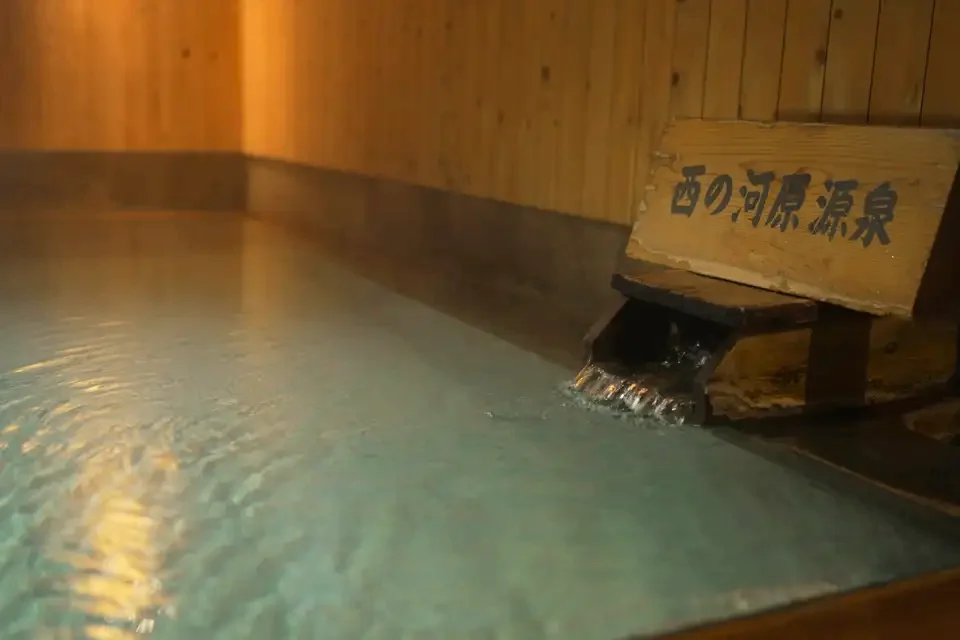
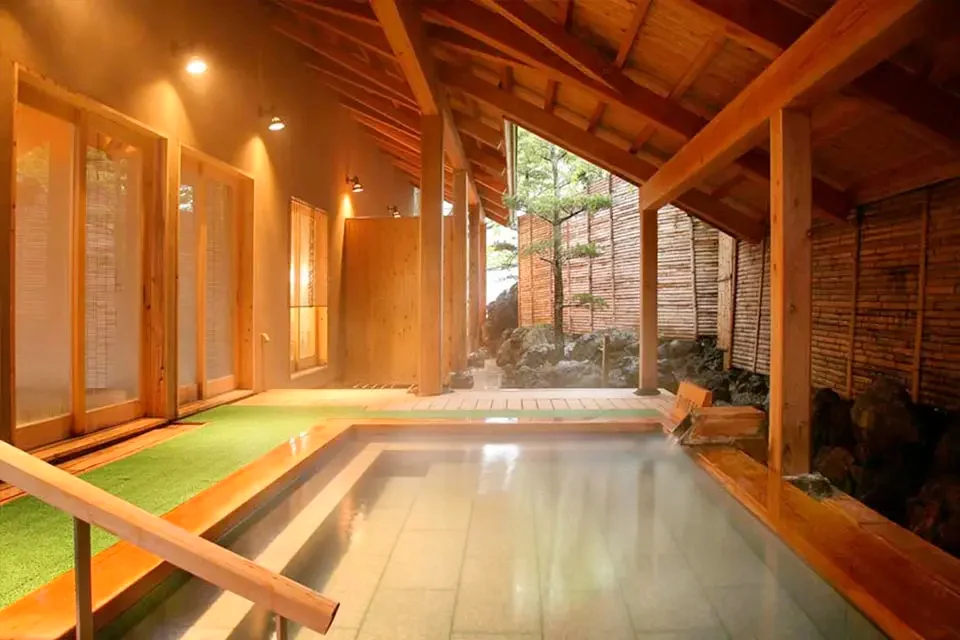
Sainoyu
[Source: Sainokawara]
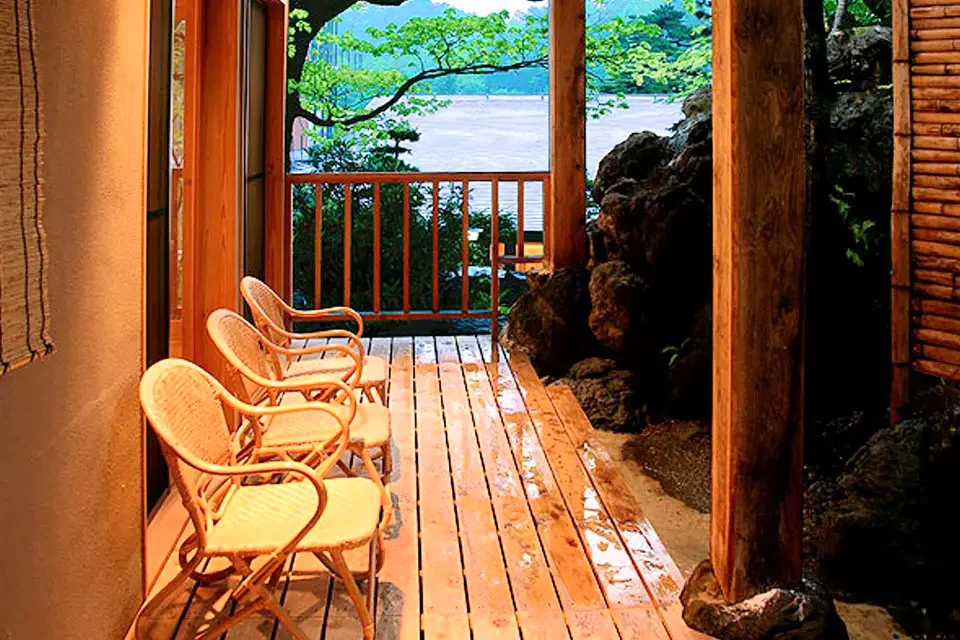
Indoor bath · Open-air bath
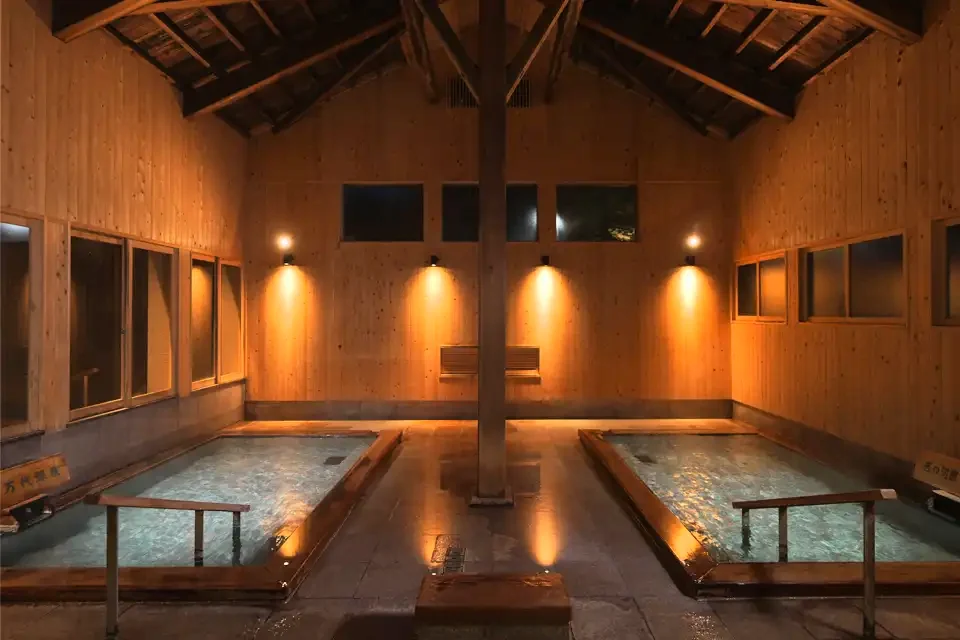
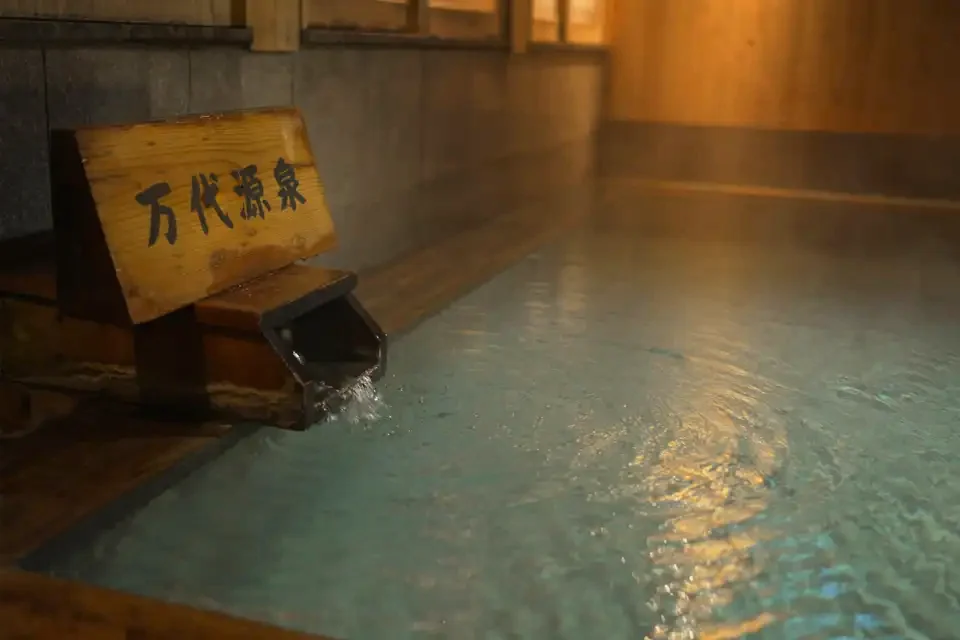
Yusannoyu
[Source: Sainokawara & Bandaiko]
Sainokawara spring on the right, Bandaiko spring on the left —
a single bath where both waters may be enjoyed at once.
Indoor bath · Open-air bath · Sauna
The baths are open from check-in (2:00 p.m.) until check-out (10:00 a.m.).
At dawn the men's and women's baths are swapped, and for this changeover and a brief cleaning they are closed for two hours (3:00 to 5:00 a.m.). The sauna is available until 11:00 p.m.
The hours for each bath are as follows.
| Bath | Men | Women |
|---|---|---|
| Bandainoyu | 2:00 PM – 3:00 AM | 5:00 AM – 10:00 AM |
| Sainoyu | 3:00 PM – 3:00 AM | 5:00 AM – 10:00 AM |
| Yusannoyu | 5:00 AM – 10:00 AM | 2:00 PM – 3:00 AM |
About the Sainokawara Source
This spring is drawn from Sainokawara, one of Kusatsu's celebrated sights, and shares the long history of the Yubatake source. Gentle on the skin and quick to settle in, it is one of the springs that best represent Kusatsu.
About the Bandaiko Source
The Bandaiko spring rises deep within Mount Hon-Shirane. Emerging at a remarkable 94 to 95°C, it is a fine, powerful water prized for its sterilising and anti-inflammatory qualities.
Making the most of your time in the baths at Boun
Kusatsu Onsen has more than a hundred natural springs, large and small, and the greatest volume of hot-spring water in Japan — a nation renowned for its onsen. The waters share an acidic quality, rich in sulphur, aluminium, sulphate and chloride. Beyond the benefits common to hot springs — neuralgia, muscle and joint pain, frozen shoulder, motor paralysis, joint stiffness, bruises, sprains, chronic digestive complaints, haemorrhoids, poor circulation, convalescence and general well-being — they are especially effective for skin conditions, chronic gynaecological disorders, diabetes, high blood pressure and arteriosclerosis.
About the temperature of the water
As you enter the water you may feel a slight tingling on the skin, and the bath may seem hotter than it is — both are characteristic of an acidic spring, and the water settles against the skin within a minute or so. To preserve the water in its natural state we avoid adding cold water where possible, keeping it at around 42 to 43°C. Should you ever find a bath too hot or too cool, please let us know and we will gladly adjust it.